IMF deal expected to promote agricultural and industrial transformation – Prof. Quartey
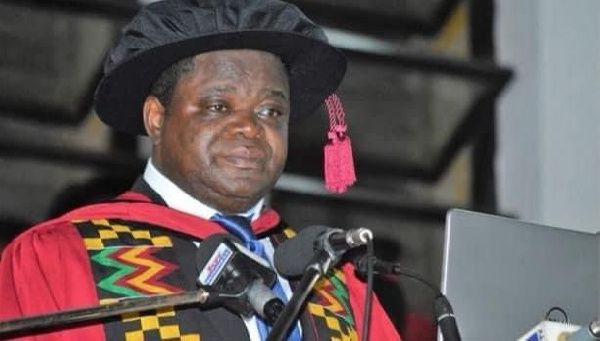
The Director of the Institute for Social and Economic Statistical Research (ISSER) at the University of Ghana, Professor Peter Quartey, has urged the government to ensure that engagement with the International Monetary Fund (IMF) is framed around local policies on agriculture and industrial transformation that will make the economy robust.
Speaking to reporters during ISSER’s post-mid budget review discussions, Prof Quartey said that as global events continue to negatively impact the local economy, it Discussions with the Government’s proposed Enhanced National Program Fund need to focus on supporting policies that will improve agriculture, industrial transformation and revenue mobilization.
“The IMF will certainly engage you on what you have and what you want to do. And so any policy that we prepare should focus on agriculture… Agriculture is the key. We risk facing an impending food crisis if we do not address the challenges of agriculture. So I want to see investments in irrigation, seed varieties in the value chain, credit guarantee for agriculture, etc. For me, this is very important; let’s solve the food problem.
“Second, improving revenues. We have said many times that we cannot continue to rely solely on tax revenues. We have non-tax revenues – for example, public companies. money while trying to block the leaks from our tax system?With digitization we have seen many more online channels, how can we strengthen it to ensure we generate more revenue?
“Ghana needs national policies to withstand global shocks. Structural change in the economy is essential for Ghana to build resilience to global shocks,” he said.
Budget recommendations
The institute used the platform to propose solutions to the government to implement in the budget to ensure that structural deficiencies in the economy are reversed. These include adding value to raw materials before export, increasing production in key sectors and the value chain, among others.
“Ghana is still heavily dependent on revenue from commodity exports. There is a need to change structures to add value to primary products to adapt to an increasingly unstable global economy. National initiatives should aim to increase productivity and improve production in key primary sectors and value chains,” ISSER said.
Again, when it comes to improving the fiscal situation, the institute advises the government to implement the Tax Exemption Act quickly, as import exemptions alone cost nations some 4 billion GH¢ in 2021 and over 2.3 billion GH¢ so far this year.
He further called on the government to reintroduce tolls using the E-pass system to avoid overcrowding at toll booths and to ensure that all revenue goes directly to the state and is not bypassed into private pockets. .
With regard to the Electronic Transfer Levy (E-levy), which has had dismal results since its implementation, ISSER proposes that the government reduce the levy to 0.5 or at most 0.75% instead 1.5% to encourage consumers to continue using the services. like mobile money in their daily transactions.