Regulatory delay in the publication of the FSR
Asjadul Kibria |
Published:
October 22, 2022 9:19:47 PM
Needless to say, risks to financial stability have increased around the world amid the highest inflation in decades. The ongoing Russian war in Ukraine has heightened risks as the negative impact of the war is already spreading to European and global energy markets. Market liquidity is already low and there is also a risk that a sudden and confusing tightening in financial conditions will add to already existing vulnerabilities.
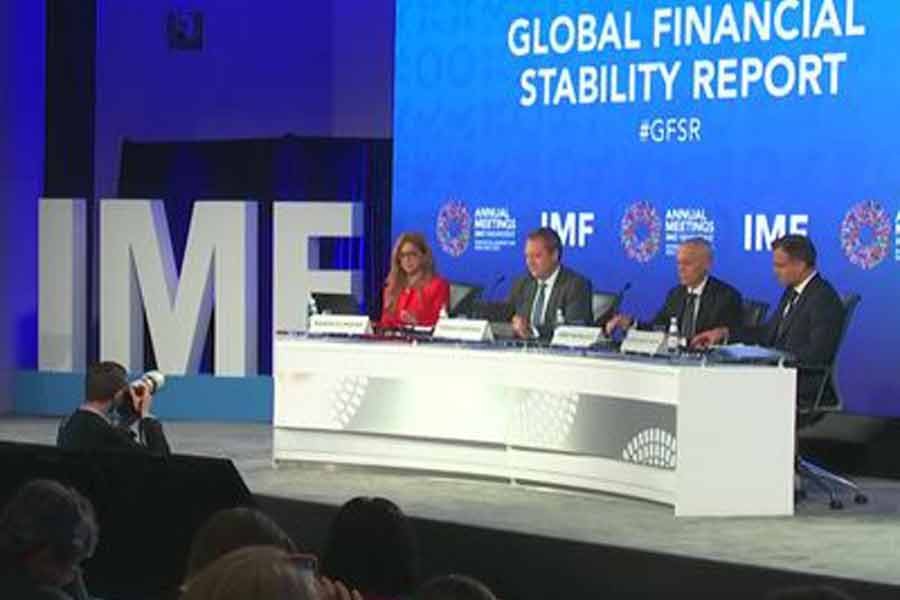
This is the near-summary version of the latest Global Financial Stability Report (GFSR) from the International Monetary Fund (IMF), released the second week of this month, packed full of do’s and don’ts. The report also pointed out that in emerging markets or developing countries, rising rates, weak fundamentals and large asset outflows have already pushed up the cost of borrowing, especially for frontier economies. Thus, it also increased the risk of further defaults on debts.
The central message of the IMF report is that rising inflation and monetary measures to curb inflation have combined to create a difficult situation that has already destabilized the financial market. In other words, global financial stability has weakened and no country is immune to a situation that risks getting worse too soon.
It should be noted here that financial stability is a global issue. The European Central Bank (ECB) has defined financial stability as a condition in which the financial system – made up of financial intermediaries, markets and market infrastructures – is able to withstand shocks and the resolution of financial imbalances. “This mitigates the prospect of disruptions to the financial intermediation process severe enough to negatively impact real economic activity.”
Thus, a sound and stable financial system is essential to the proper functioning of any economy. Maintaining financial stability is also difficult because there are always risks of exogenous and endogenous shocks. This is why a consistent examination of the financial situation of any economy is useful in dealing with any unstable or uncertain situation.
In Bangladesh, as in most countries, the central bank is primarily responsible for maintaining financial stability and monitoring the situation. Other financial regulators like the Securities and Exchange Commission (SEC) also play an important role and support the central bank. As part of this critical task, the Bangladesh Bank also publishes a Financial Stability Report annually. Last week, he unveiled the “Financial Stability Report 2021,” which is the 12th annual in the series. Introduced in 2010, the report also becomes one of the central bank’s flagship publications.
The first report mentioned that “a financial system can be considered stable if it fulfills its functions and is able to withstand the shocks to which it is exposed”. Bangladesh’s financial system is made up of banks, non-banking financial institutions (NBFIs), insurance companies, stock exchanges and microcredit organizations.
The latest report “contains the assessment of recent challenges and outlook of different segments of Bangladesh’s financial system to convey to stakeholders the state of the overall financial stability of the economy. It deals with the global and national macroeconomic environment as well as the performance of banks and other financial intermediaries and their ability to maintain a stable financial ecosystem. The report covers the development of the country’s financial system in 2021.
In addition to covering macroeconomic development over the past year, the report focuses on the performance of the banking sector and financial institutions (FIs) as well as the risks and resilience of banks and FIs. The report further shed light on money, capital and foreign exchange markets, financial infrastructure, the insurance sector and microfinance institutions. So, anyone who wants to get a complete picture of the entire financial sector in the country should go through the report.
So what are the main findings and messages of the report? It finds that after experiencing an upward trend in asset growth in 2019 and 2020, the banking sector experienced modest growth in 2021. The quality of assets in the banking sector, however, deteriorated slightly, the gross ratio non-performing loans (NPL) having increased slightly over the past year. The liquidity situation in the banking sector remained buoyant in 2021, according to the report, and the overall risk of the banking sector decreased slightly.
Bangladesh Bank’s assessment also found that banks and FIs would “remain moderately resilient to different shock scenarios”, although the “uptrend in NPLs, provisioning shortfall, equity declines and profitability” are likely to cause problems for FIs.
It appears that the central bank team exercised the utmost caution before commenting on any critical areas of the financial sector. Although final comments or remarks on any area are based on up-to-date data and careful analysis, in most cases the narrow approach to drawing a conclusion is clear. In doing so, the report seems to have concealed or avoided certain vulnerabilities in the financial sector.
The final conclusion of the report is as follows: (a) Bangladesh’s financial system has been resilient in 2021, thanks to the support measures of the government and financial sector regulators and (b) the country’s financial stability could be threatened in a near future due to geopolitical tensions and inflation and therefore caution is needed to deal with the threat.
A problem with the latest Financial Stability Report (FSR) is that it is published more than nine months after the end of 2021. As the time lag is long and a lot has changed over the past nine months, various data and developments included in the report may seem less relevant. It is hard to understand why the release of an important document like the Financial Stability Report has been so delayed. Even in 2018, the report was released in May while most previous reports were released in June or July. In this regard, the central bank should be careful so that the report can be released after three to four months a year. Nor is there any reason why this should not be possible as the systems for collecting and compiling data have improved considerably. Only a few bureaucratic complications can delay the process, which is not desirable.
[email protected]