Sri Lankan president struggles to form multi-party government
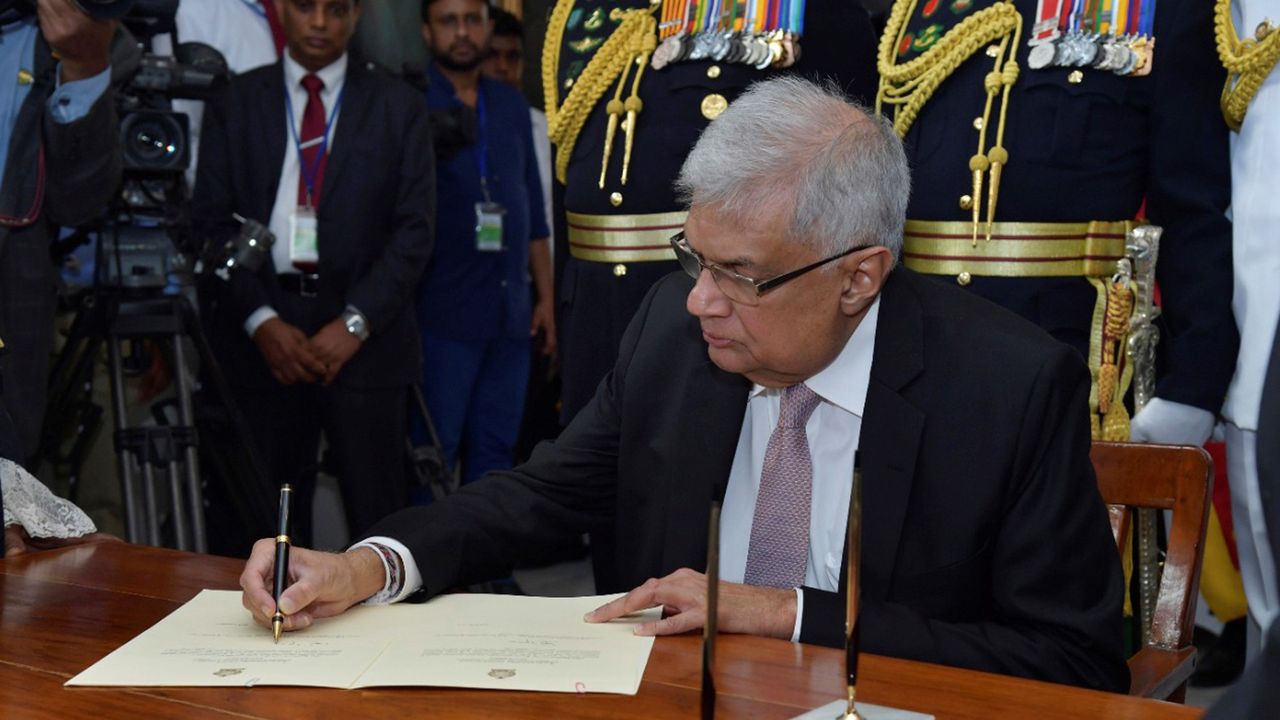
Despite initial promises from opposition parliamentary parties, Sri Lankan President Ranil Wickremesinghe has not yet been able to cobble together a multi-party regime. So far, only minor parties have agreed to join such a government.
On August 3, when Wickremesinghe called for a multi-party government during his inaugural speech for the new parliamentary session, most opposition parties expressed their willingness to participate. His goal was to rally the political establishment in Colombo to jointly impose the savage austerity measures of the International Monetary Fund (IMF) and suppress any opposition from workers and the poor.
Sri Lanka’s parliamentary parties all basically agree with the IMF’s austerity program as a solution to the unprecedented economic crisis. They fear, however, the mass popular opposition that the widely despised Wickremesinghe will face as the brutal austerity measures are implemented. Wickremesinghe is the only United National Party MP and was installed as speaker by the discredited parliament. Its main base of support is the Sri Lanka Podujana Peramuna (SLPP) of former President Gotabhaya Rajapakse who was forced to flee the country.
Over the past two weeks, Wickremesinghe has held talks with the main opposition Samagi Jana Balawegaya (SJB), as well as the Sri Lanka Freedom Party (SLFP) and the Muslim and Tamil parties.
Although the SJB has officially announced that it supports a multi-party government, it will not join it. SJB leader Sajith Premadasa said his MPs “have agreed to work through an empowered system of parliamentary committees” to support the government, but would not accept any ministerial posts.
In line with this position, SJB MP Harsha de Silva was appointed Chair of the Parliamentary Public Finance Committee. SJB MPs Eran Wickremaratne and Kabir Hashim have also been proposed to head the parliamentary committees on state-owned enterprises and public accounts respectively.
Internal frictions arose within the SJB, however, over the willingness of de Silva, Wickremaratne and Hashim to join the government and accept ministerial posts. Last week, these MPs jointly announced that they would not openly criticize the government.
Prime Minister Dinesh Gunawardena is expected to hold further separate talks this week with the SJB, the SLFP and the Janatha Vimukthi Peramuna (JVP)-led National People’s Power (NPP).
The JVP/NPP has already rejected any participation in Wickremesinghe’s multi-party regime and is calling for “urgent general elections” and a new administration with a “mandate” to implement austerity measures.
SLFP General Secretary Dayasiri Jayasekera told the media on August 15 that his party would also support “a multi-party government as proposed by President Ranil Wickremesinghe”, but was “unwilling to take government positions. “.
The SLFP is also a “rump” party with only nine deputies. Two SLFP MPs, Nimal Siripala de Silva and Mahinda Amaraweera, have however been ministers for some time and remain party members.
The bourgeois Tamil National Alliance (TNA) has expressed support for the multi-party proposal. TNA spokesman MA Sumanthiran, after a discussion with Wickremesinghe, said his party was “willing to work with the government from outside, supporting progressive steps that could be taken.”
The TNA has submitted a “ten-point program”, which includes the release of political prisoners still held under the Prevention of Terrorism Act (PTA), the return of private land currently occupied by the military, and the repeal of the PTA, as the basis of its “outside support” for Wickremesinghe.
The Sri Lanka Muslim Congress, the plantation-based Ceylon Workers Congress and the Eelam People’s Democratic Party (EPDP) have expressed their willingness to join a multi-party government. The other three plantation-based unions – the National Union of Workers, the Democratic People’s Front and the Hinterland People’s Front – said they were still considering the president’s invitation.
The disparate response from these political parties, as well as some backtracking from their earlier agreement to Wickremesinghe’s call for multi-party government, highlights the huge political crisis of Sri Lanka’s ruling elite.
The ruling class and its parties have been plunged into crisis over the past four months by the historic anti-government uprising of workers and the poor in response to the dire economic and social conditions in the country.
Mass protests and general strikes demanded the resignation of former President Gotabhaya Rajapakse and his regime and an end to shortages and the unbearable cost of basic necessities. While ongoing protests have forced Rajapakse to flee the country, Wickremesinghe, his equally despised successor, is determined to carry out even bigger attacks through the IMF program.
Unable to win the agreement of the main opposition parties, Wickremesinghe is now reportedly trying to persuade MPs from some of these parties to join a multi-party regime by offering them cabinet posts. This kind of bargaining is a routine procedure in Sri Lanka to secure a parliamentary majority. Media also report that Wickremesinghe is considering calling the regime a “national government”.
Wickremesinghe is desperate to show the IMF, big business and international powers that he is capable of establishing political stability. An IMF team is due to arrive in Sri Lanka for a week of talks with the government on August 24.
He also wants a quick deal with the IMF to get financial help from other agencies, such as the World Bank and the Asian Development Bank, and other countries. He hopes to obtain a loan of 3 billion dollars within the framework of the expanded financing mechanism of the IMF.
Any IMF financing will require the destruction of hundreds of thousands of public sector jobs, privatizations, further cuts in subsidies and drastic breakthroughs in the remaining public education and health services, as well as higher taxes and further reductions in price subsidies for essential goods.
Two weeks ago, the government raised electricity tariffs by more than 75%, postal tariffs by 233% and announced future increases in water tariffs. The government has already announced a rapid “restructuring” of the state-owned Electricity Board and Petroleum Corporation as the first targets of their privatization.
Last week, the government unleashed violent police attacks on protesting university students in Colombo, arresting more than 20 people. They will be prosecuted on false charges of “unlawful assembly” and attacking the police. Police are also seeking permission to detain Wasantha Mudalige, head of the Inter-University Student Federation, under the Prevention of Terrorism Act.
Yesterday, Wickremesinghe extended a proclamation mobilizing the armed forces in all districts of Sri Lanka. These class war measures are aimed at imposing the brutal demands of international finance that workers and the poor must pay for the crisis of Sri Lankan capitalism.
Electricity Board and Petroleum Corporation workers have already signaled they will resist privatization, with oil company workers staging a protest march today.
The working class cannot rely on the unions, which betrayed the general strike of millions of workers on April 28 and May 6 and diverted them to supporting the demands of the SJB and JVP for an interim capitalist regime, after the eviction from Rajapakse.
The Socialist Equality Party (SEP) rejects any interim or multi-party capitalist regime or any future “national government” whose task will be to intensify Colombo’s class war against workers and the poor. The PES calls for the mobilization of the immense social power of the working class to rally the rural masses against government austerity measures and state repression.
The SEP calls for the creation of action committees in every workplace, estate and neighborhood and in rural areas, independent of trade unions and capitalist parties.
The PES is campaigning for a democratic and socialist Congress of workers and rural masses, based on these action committees. The mobilization of workers and the rural poor in these action committees will pave the way for a political struggle for a workers’ and peasants’ government and socialist policies within the framework of a struggle for socialism at the international level.