The way forward for striking Sri Lankan workers
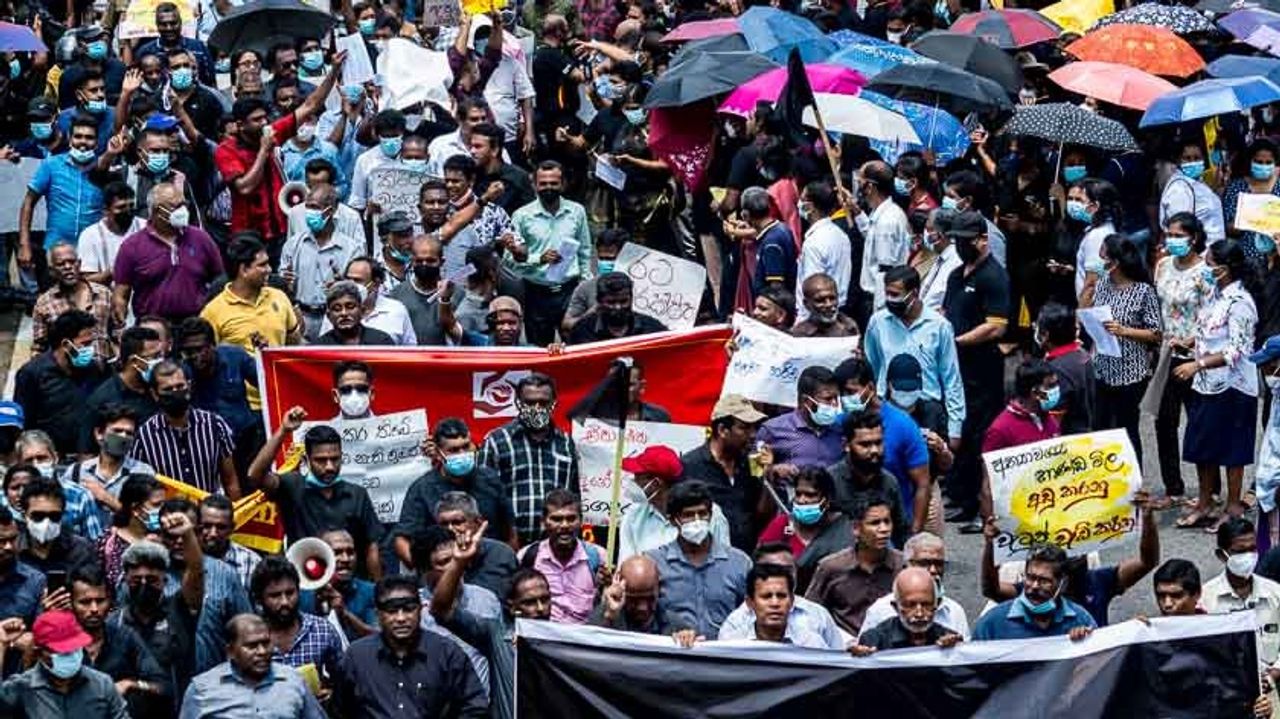
Millions of Sri Lankan workers will take part in tomorrow’s one-day general strike, following a similar strike last Thursday.
The unions called Friday’s action a “hartal” (general strike and closure of businesses) and called on everyone to support it. The unions will call another day of strike action on May 11, as part of their effort to deflect the anger of the seething masses.
These strikes will embrace the entire working class while the most oppressed sections of the population, including the rural and urban poor as well as small entrepreneurs, are expected to join.
Millions are demanding the resignation of President Gotabhaya Rajapakse and his government and an end to the social catastrophe inflicted upon them by the Rajapakse regime and the entire ruling class.
The intervention of the working class in Sri Lanka is significant and welcome. This is part of the class struggles that are sweeping across the world, including in Sudan, Iran, Peru, Turkey and India to name a few countries. Strikes and protests are also emerging in major capitalist centers, notably in the United States and Europe.
Workers in all these countries are up in arms against the assault on their living conditions with soaring inflation and the reduction of wages and jobs. The global capitalist crisis has been fueled by the COVID-19 pandemic and exploded to a new stage with the US-NATO proxy war in Ukraine against Russia.
The entry of the working class into the struggle in Sri Lanka comes on top of ongoing anti-government protests across the island that began in early April. This mass movement has not only shaken the Rajapakse government, but the entire ruling establishment, including the trade unions which act as a vital support for the capitalist system.
Despite all their militant postures on tomorrow’s general strike, the unions are desperately seeking to curb the development of the working class strike movement.
Ravi Kumudesh, the leader of the Federation of Health Professionals, said: “We have given the government until May 6 to step down and if the government does not listen to the people, we will have to have a hartal.”
The general secretary of the Ceylon Teachers’ Union, Joseph Stalin, thundered: “If the government does not want to leave, we will have to kick it out.
What is the political agenda, however, that the unions are pushing behind this empty pump?
All seek to divert the working class into the stalemate of parliamentary politics and into the arms of capitalist opposition parties.
In its May Day statement, the National Trade Union Front and mass organizations listed its main demands as follows: “Resignation of the discredited president and prime minister and of the government; Authorize a temporary regime for a certain period; Political stability with a small cabinet; Exercise the sovereignty of the people through parliament; Establish a government after a certain period of time with the mandate of the people.
The Trade Union Coordinating Committee, the other trade union front calling for Friday’s general strike, is campaigning on the same basis.
What is the meaning of these requests? It is a matter of replacing the totally discredited Rajapakse government with an unelected interim government of opposition parties and then organizing elections. The goal of the interim regime is clear: to establish “political stability”, in other words to suppress the movement of strikes and mass protest in order to stabilize the capitalist regime.
The unions’ demands are virtually identical to those of the opposition parties – the right-wing Samagi Jana Balawegaya (SJB) and the Sinhalese communitarian Janatha Vimukthi Peramuna (JVP) – as well as corporate lobby groups. “Political stability” is what big business demands as well as the International Monetary Fund (IMF) and foreign investors.
None of the parliamentary parties, government or opposition, has an alternative to the austerity program currently in place. No one objected to the government’s decision to seek an emergency bailout from the IMF or explained that such a loan would inevitably mean more, not less, austerity. Both the SJB and the JVP have a track record of implementing market-friendly restructuring.
What is brewing is an even worse social catastrophe for workers. After two weeks of talks with the IMF, the Ministry of Finance issued a statement on May 2 outlining what is being discussed as the price of a bailout.
He made it clear that sweeping privatization is on the agenda as “investments in sectors such as education, health, public transport and service delivery” are needed. The statement stated bluntly that “a culture of unproductive government subsidies and handouts is no longer sustainable”, meaning that price subsidies, social benefits and social services must be further reduced or eliminated altogether.
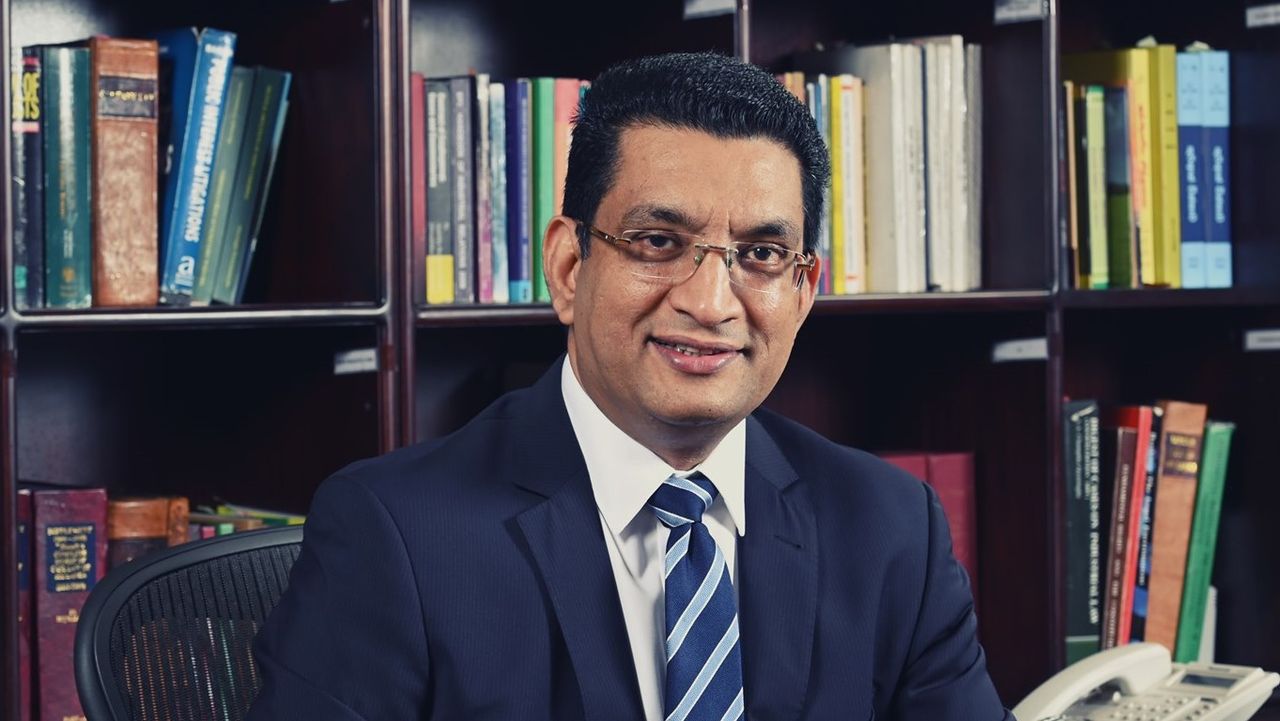
Addressing Parliament on Tuesday, Finance Minister Ali Sabry said the country’s foreign exchange reserves had fallen to $50 million, adding: “I don’t know if these problems can be solved even in two years.” . He made it clear that major tax increases will be imposed, saying: ‘People who win have to share money or society will collapse. Tax revenues will need to increase by about 15% over the next two to three years.
The IMF demands that working people and the poor be forced to pay for already crumbling public health care, children’s education and all other services with their meager wages. At the same time, jobs, wages and pensions will be reduced. In short, workers and the poor must sacrifice themselves for the survival of decaying capitalism.
The entire political establishment, including opposition parties and trade unions, knows that such austerity measures, adding to an already severe social crisis, cannot be implemented democratically. Behind the scenes, the security forces are prepared to be used against protests and strikes, whether by the Rajapakse regime or any capitalist government that replaces it. Already, police have opened fire without warning on protesters in Rambukkana, killing Chaminda Lakshan and injuring others.
Unions play a criminal political role. Their strikes are not called to resolve the social and economic crisis facing working people, but to vent and buy time for the political establishment as it prepares its deep attacks on the working class. He tries to make workers believe that an “interim regime” and elections will put an end to the social disaster they face.
The Socialist Equality Party (SEP) warns the working class that the only way to defend their democratic and social rights is to mobilize their independent force on the basis of a program that meets their urgent class needs – in d’ other words, a socialist program.
We encourage workers everywhere – in your factories and workplaces, on the plantations and in the working-class suburbs – to form action committees independent of the unions to fight for your class interests.
To defend democratic rights, the SEP demands the immediate abolition of the executive presidential system, as well as all repressive legislation, including the emergency laws, the law on essential public services and the law on the prevention of terrorism.
There is no solution for working people to skyrocketing prices, shortages of basic necessities and rampant starvation within the capitalist system.
The SEP proposes the following demands as the basis for a political struggle of the working class through its action committees:
Place the production and distribution of all essential goods and other resources critical to public life under the democratic control of workers!
Nationalize the banks, the big companies, the big domains and other big economic centers under workers’ control!
Reject the austerity demands of the IMF and the World Bank which represent the banks and international financial institutions!
Grab the enormous wealth of billionaires and corporations!
Abolish all the debt of poor peasants and petty traders! Restore all subsidies, including fertilizer subsidies for the peasantry!
Guarantee jobs for all with decent and safe working conditions! Index wages to the cost of living!
Repudiate all foreign borrowings!
By forming action committees and fighting for its social rights, the working class will begin to rally to its side the rural masses who are suffering the same attacks.
In opposition to the trade unions’ campaign for an interim regime and the defense of capitalism, the PES advocates the revolutionary overthrow of the profit system and the establishment of a workers’ and peasants’ government to reshape society on a socialist basis.
In this political struggle, Sri Lankan workers must turn to their class brothers and sisters around the world who face similar attacks and are now entering into struggle. There is no national solution in any country to the crisis created by global capitalism facing working people.
This is why the PES urges workers to create a network of action committees and to coordinate with workers in other countries through the International Alliance of Rank and File Committee Workers (IWA-RFC), launched by the International Committee of the Fourth International.
The past month bears witness to the urgency of the tasks awaiting the working class and to the need to base its political combat on the socialist and internationalist program drawn up by the PES. Such a struggle requires revolutionary leadership. We urge workers who wish to form action committees to contact the PES. Above all, we call on you to join the SEP and build it as a mass party.