New Tanzanian shillings 41 trillion budget focuses on strategic projects
Dar es Salaam. Yesterday the government explained the factors behind the 8.1% increase in the budget for the 2022/23 financial year, saying it was a deliberate move aimed at boosting investment in strategic projects.
The increase will fund the stimulation of economic growth in the areas of agriculture, fisheries, forestry, livestock, minerals and the development of infrastructure projects.
Speaking recently, President Samia Suluhu Hassan said the government plans in the next budget to go further in irrigated agriculture. Other areas are civil servant salaries, servicing the national debt, improving the country’s electronic procurement system (TANePS) for the purchase of goods and the financing of services and construction activities.
The country’s budget is expected to reach Sh41.060 billion, or Sh3.080 billion from Sh37.980 billion approved as the budget for the financial year 2021/22.
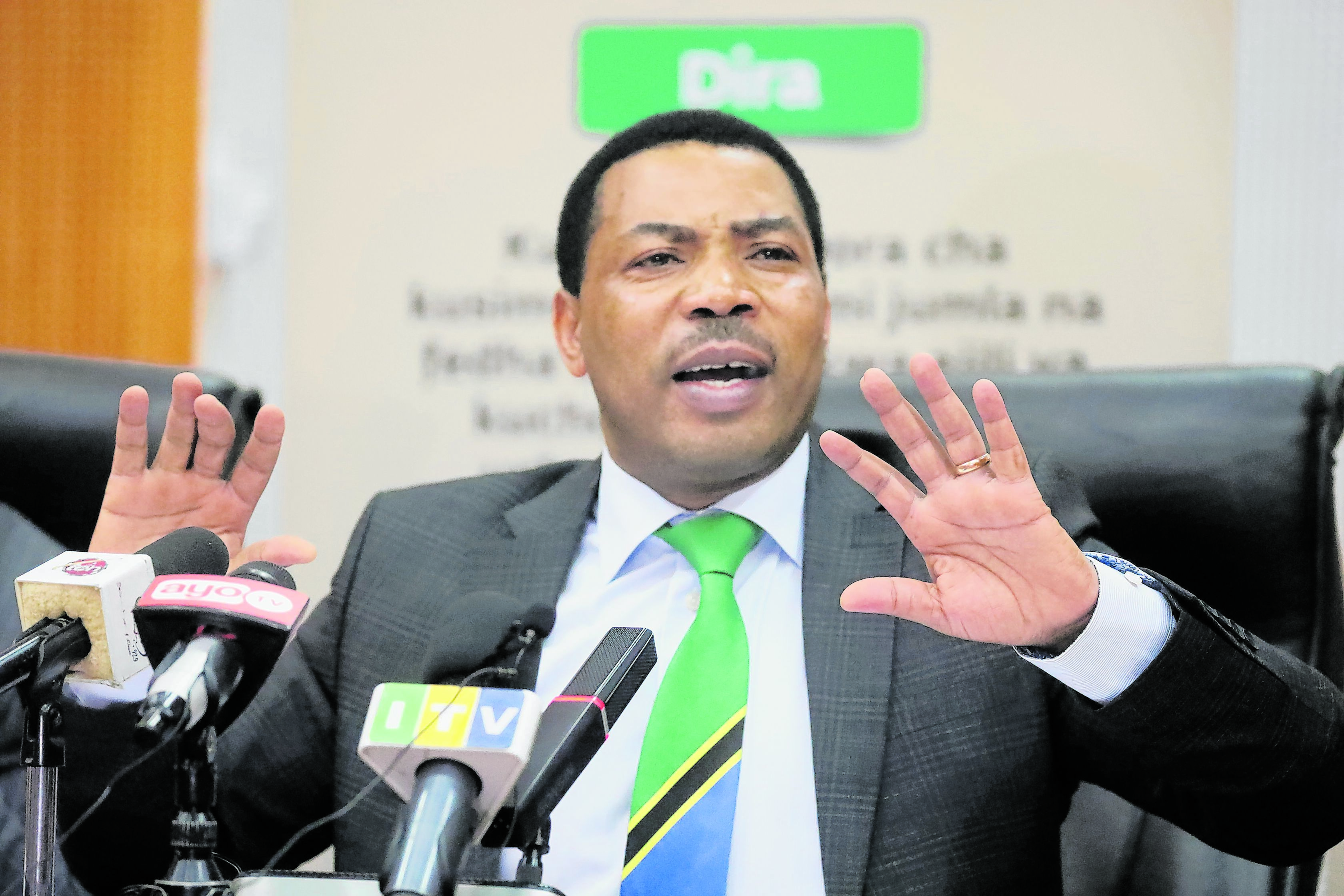
In tabling the 2022/23 budget forecast before the Parliamentary Budget Committee in Dodoma yesterday, Finance and Planning Minister Mwigulu Nchemba said the preparation of the budget was done on the basis of five key assumptions.
He called the assumptions of increased private sector participation in development activities, continued tolerance for natural calamities and the impacts of the ongoing Russian invasion of Ukraine.
Other assumptions are the pursuit of food sufficiency and the presence of peace, security, unity and tranquility.
“Domestic revenue is expected to be 28.698 trillion shillings, or about 69.9% of the budget. It is expected that 4.16 trillion shillings will increase through aid and subsidized loans from development partners, which is equivalent to 10.1% of the budget,” said Dr Nchemba who is also an MP for the constituency of ‘Iramba West.
In the 2022/23 financial year, Dr Nchemba said the government was to obtain a loan of 5.35 shillings from the domestic market, of which 3.3 trillion shillings would be used to service government bonds that had come due. maturity and an additional 2,050 billion shillings to finance development projects.
He said the government will also secure a loan of 2.86 trillion shillings from foreign markets on commercial terms to finance the execution of development projects.
“The government plans to spend 41.06 trillion shillings in the financial year 2022/23. 25.54 trillion shillings will be spent on recurrent expenditure, approximately 62.2% of the budget and 11.31 trillion shillings for servicing the national debt and other costs related to the consolidated fund,” he said. declared.
Dr Nchemba said 9.74 trillion shillings would be used for salaries, including the implementation of upgrade proposals and new recruitment of civil servants.
He said 4.49 trillion shillings would be allocated to other charges (OC) and expenditure to finance development projects would be 15.52 trillion shillings, which is equivalent to 37.8% of the total budget. .
“Of the total amount earmarked for development projects, 12.12 trillion shillings equivalent to 78.1% will come from internal sources, while the remaining 3.40 trillion shillings will come from development partners,” he said. declared.
Russia/Ukraine War
Economic sanctions imposed on Russia will significantly affect Tanzania’s economy if the war lasts long, according to Dr Nchemba, noting that gas supply will seriously affect the country which is a major supplier of gas in the world by 40% .
“The price of energy is expected to increase negatively and therefore affect the Tanzanian economy. In addition, interest and bond prices on the international market, the price of gold and agricultural products, services and raw materials imported from abroad as well as aid and concessional loans from development partners will also be affected,” he said.
“Russia’s suspension of using the banking communication system in financial transactions will negatively affect trade with other countries, tourism, education and the service of diplomatic offices in the country, as well as the increase in inflation rate,” he added.
The situation 2021/22
Dr Nchemba told the Budget Committee that 21.720 billion shillings had been collected between July 2021 and January 2022, out of a target of 22.520 billion shillings, or 96.4%.
He said the failure to meet national collection targets was attributed to falling commodity prices both domestically and internationally due to the global Covid-19 outbreak, tax evasion , the decline in sources of income due to the proliferation of online businesses.
According to him, 3.16 trillion shillings were received from development partners between July 2021 and January 2022, which is 118% of the target of raising 2.68 trillion shillings. Additionally, he said the money included a 1.31 trillion shillings subsidized loan from the International Monetary Fund (IMF) for the Covid-19 Response Facility (CRF), noting that meeting contractual obligations during of the implementation of the projects was at the origin of the achievements.
Inflation
Dr Nchemba said inflation averaged 4% between July 2021 and January 2022, attributing the situation to factors beyond the government’s control.
For example, he said the price of crude oil products reached $87.4 per barrel on January 31, 2022 from US$72.6 per barrel on July 1, 2021, insisting that the situation will continue due to the ongoing war between Russia and Ukraine.